Projected savings
$450K
Built the product case for Shipment Risk Reasons as a way to reduce avoidable operator tracking work, representing a projected $450K in yearly savings.
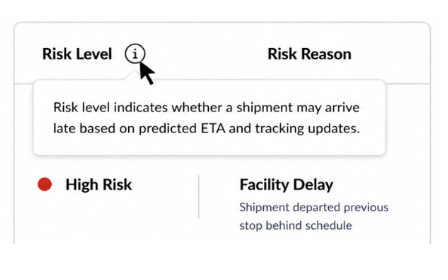
Launched a shipment risk reason service feature to explain why a load is at risk and make delivery issues more actionable.
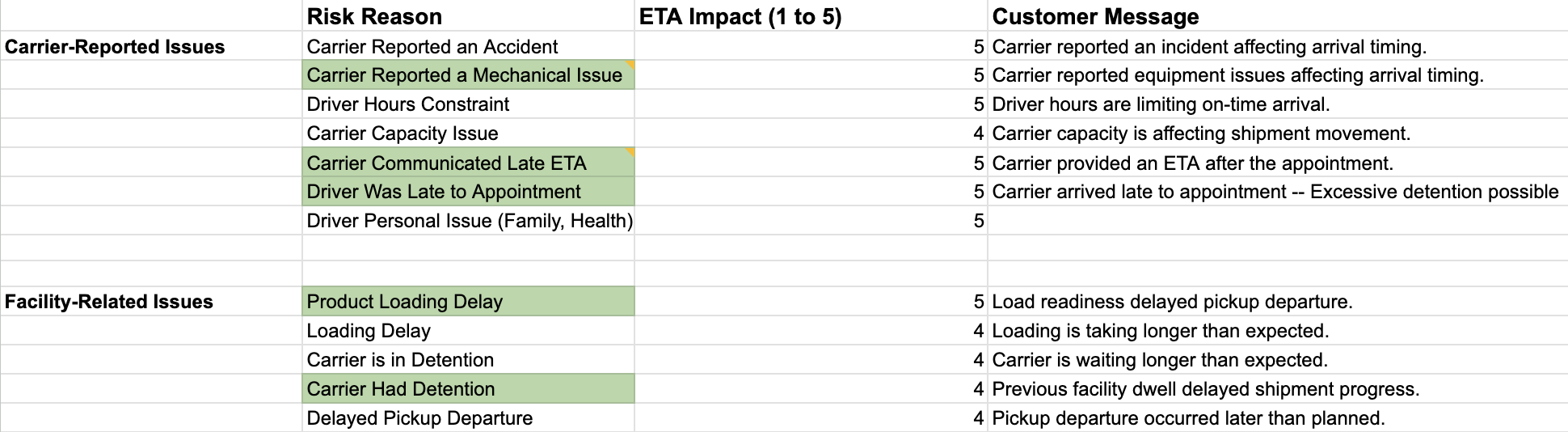
REASON TAXONOMY
Projected savings
$450K
Built the product case for Shipment Risk Reasons as a way to reduce avoidable operator tracking work, representing a projected $450K in yearly savings.
Coverage target
60%
Defined an MVP taxonomy designed to explain approximately 60% of Medium and High Risk shipments using reliable, customer-safe shipment signals.
Tracking outreach
Down
Designed risk explanations to reduce customer follow-up by clarifying why a shipment is at risk, which stop is affected, and what happens next.
I led product discovery, taxonomy development, trigger logic definition, prioritization, and PRD framing for the Shipment Risk Reasons experience.
I synthesized feedback from PMs, engineers, designers, data scientists, and operators into an MVP framework with P0/P1 reasons, customer-facing copy, fallback states, and open questions for validation.
Trigger logic, shipment stage detection, reason output structure, API requirements, fallback handling, and trustworthy data sources.
Banner placement, summary card hierarchy, route timeline integration, and top-of-page shipment story.
MVP scope, reason prioritization, customer-facing requirements, and alignment with the broader tracking portal strategy.
Weighting, validation, and how child signals could roll up into a new parent risk level.
Real shipment examples, operator comments, and delay scenarios to identify frequent and explainable reasons.